Understanding "All of Pie Numbers" in Historical Tailoring: A Practical Guide
The phrase *"all of pie numbers"* might sound like a baking term, but in the world of vintage sewing and historical tailoring, it refers to a method of pattern drafting that balances precision with adaptability—especially when recreating garments from the late 19th and early 20th centuries. Unlike modern patterns that rely on standardized measurements, historical tailors often worked with modular "pie" segments that could be adjusted for fit without altering the core structure. This approach was critical for customizing clothing like cycling breeches, where mobility and comfort were non-negotiable. Today, understanding these techniques can help modern crafters achieve authentic results when sewing period-accurate garments.
Why "Pie Numbers" Mattered in 19th-Century Sewing
Before digital pattern-making, tailors and seamstresses used a system where a garment’s shape was divided into functional "pieces" or "slices"—hence the term *"pie numbers."* Each segment (think darts, gores, or even entire sleeves) could be adjusted independently to accommodate a wearer’s body. For example, a cycling breeches pattern from the 1890s might include a front panel divided into three pie-shaped sections: one for the waist, one for the thigh, and one for the knee. This modularity allowed for quick alterations, which was essential for activewear designed for movement.
The method wasn’t just about efficiency—it was about practicality. Cycling breeches, as seen in patterns from the era, often featured reinforced knees and elasticized cuffs to prevent chafing. The pie-number system ensured these details could be tailored to fit a rider’s specific leg length or hip width without scrapping the entire pattern. Modern sewists can apply this logic today by treating vintage patterns as flexible frameworks rather than rigid templates.
How to Apply Pie Numbers in Modern Sewing
If you’re working with a historical pattern like the one referenced in the image—likely from the 1860–1910 era—here’s how to interpret and adapt the pie-number approach:
- Identify the modular sections: Look for labels like "front panel," "back panel," or "side gores." These are often drawn as curved or angular shapes that can be resized.
- Use the grainline as your guide: Pie numbers align with the fabric’s grain, so mark your adjustments along these lines to maintain drape.
- Test fit early: Sew a muslin (test garment) in stages, adding or subtracting pie segments as needed. This mimics the tailors’ practice of "fitting on the form" before finalizing the garment.
- Embrace symmetry with asymmetry: Historical patterns often balanced one side (e.g., a slightly longer thigh panel) with a corresponding adjustment on the opposite side. Modern fit models can use this to their advantage.
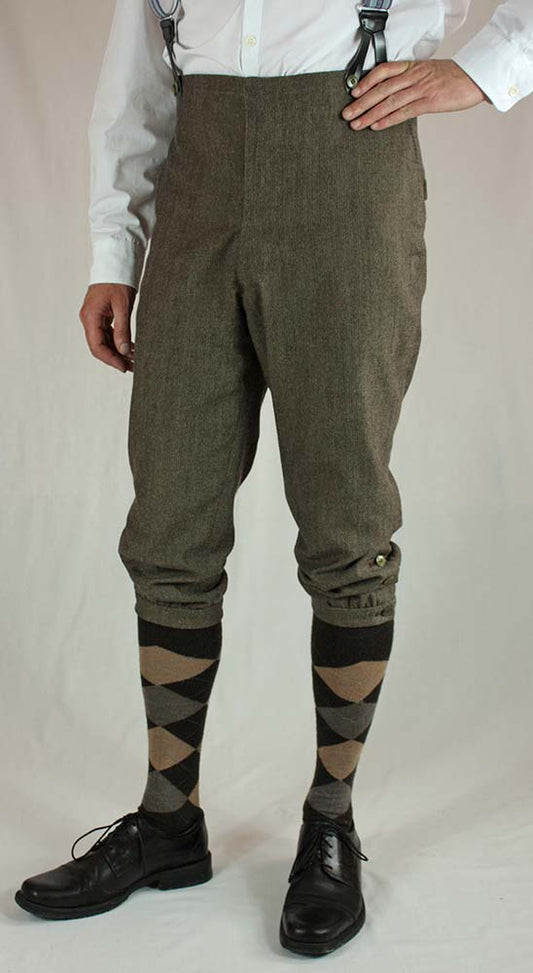 The image above illustrates how pie-number drafting allowed for tailored fit in activewear. Notice the distinct curves at the knee—each segment could be extended or shortened based on the wearer’s leg circumference.
When to Use This Method vs. Modern Patterns
The pie-number system shines in three scenarios:
- Custom historical garments: If you’re sewing a 1900s-era garment (like the breeches in the pattern), pie numbers ensure the fit aligns with period techniques. Modern patterns often simplify these adjustments, which can look inaccurate for period authenticity.
- Non-standard body types: Plus-size, petite, or uniquely shaped wearers benefit from modular drafting. Pie numbers let you add or remove fabric without altering the garment’s structure.
- Reinforced or functional pieces: Garments requiring extra durability (e.g., cycling wear, work pants) often need localized reinforcements. Pie numbers let you target these areas without compromising the rest of the fit.
For everyday sewing, however, modern patterns with flat drafting or block-based adjustments are usually more efficient. The pie-number method is a niche tool—but one that pays off when precision and period accuracy matter.
A Practical Example: Adjusting Cycling Breeches
Let’s say you’re sewing a pair of 1890s cycling breeches for a rider with a wider hip-to-thigh ratio. Here’s how pie numbers simplify the process:
- Start with the pattern’s front panel, divided into three pie segments: waist, thigh, and knee.
- Measure your waist and thigh circumference, then compare to the pattern’s measurements. If your thigh is 2 inches larger, extend the middle pie segment by 1 inch on each side.
- Recheck the fit on a muslin. If the knee area feels tight, adjust the final pie segment by adding a small gore (triangular piece) to the back panel.
- Repeat until the breeches drape smoothly over the hips and bend freely at the knees.
This method avoids the guesswork of cutting a single large panel and requires only basic sewing tools—a needle, thread, and a ruler. The result? A garment that moves with you, just as it would have in the early 1900s.
The Legacy of Pie Numbers Today
While pie-number drafting isn’t widely taught today, its principles live on in modern pattern-making. Think of it as the ancestor of today’s "block-based" adjustments or "custom fit" options in commercial patterns. For sewists who prioritize authenticity or unique fits, revisiting this technique can unlock a level of customization that off-the-rack solutions can’t match.
Whether you’re restoring a vintage garment or crafting a historically inspired piece, understanding *"all of pie numbers"* means understanding how to sew with intention—not just following a pattern, but shaping fabric to fit a body, one precise slice at a time.
PDF Men 1860-1910 – BlackSnailPatterns
PDF Men 1860-1910 – BlackSnailPatterns