How to Choose the Right Pipe Fittings for Your Plumbing Project: A Practical Guide
When tackling a plumbing job—whether it’s a simple repair or a full system upgrade—the right pipe fittings can mean the difference between a smooth installation and a frustrating mess. The wrong connection, like a mismatched thread or improper seal, can lead to leaks, pressure drops, or even water damage. For DIYers and professionals alike, understanding the basics of fittings—such as elbows, tees, and adapters—helps avoid costly mistakes. Two common but often overlooked components are **90-degree elbows with male/female threads** and **slip-fit polypropylene (PPR) joints**, each serving distinct roles in residential and commercial plumbing. Here’s how to pick the right one for your needs.
Understanding the Basics: Threaded vs. Slip-Fit Connections
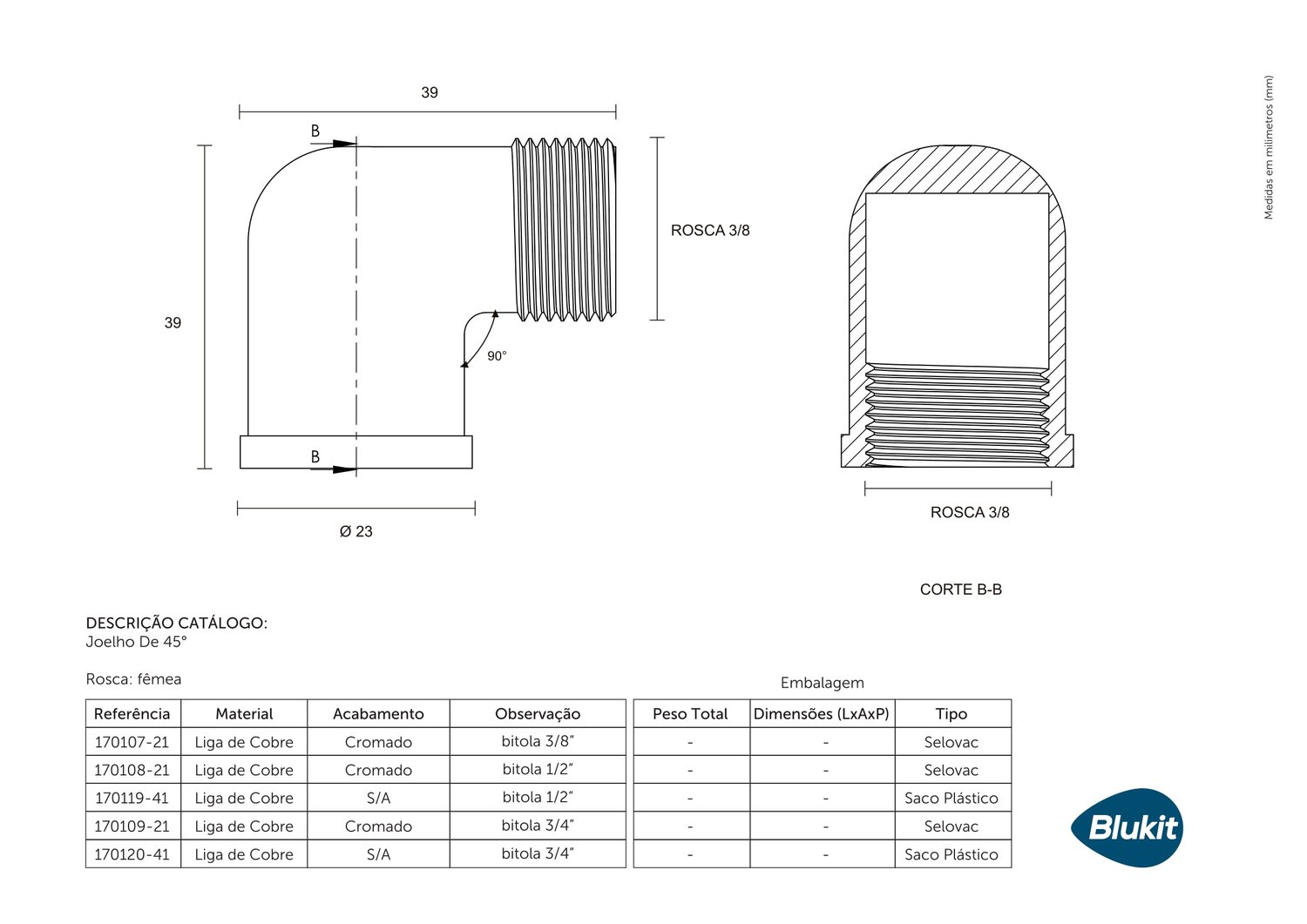
The first decision you’ll face is whether to use threaded fittings or slip-fit systems like PPR. Threaded fittings, such as the **90-degree elbow with 1/2" male and female threads** (shown below), are durable and widely compatible with metal pipes, copper, and even some plastic systems. They rely on tight threading and often require sealant like Teflon tape or pipe dope to prevent leaks. The downside? Threaded connections can be harder to disassemble later if adjustments are needed.
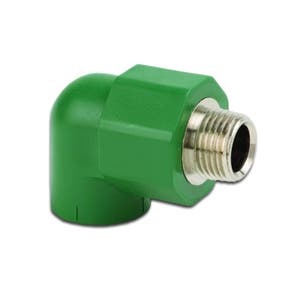
Slip-fit fittings, like the **PPR elbow with 20mm x 1/2" slip connection** (below), are simpler to install—no threading required. They use heat fusion or push-fit technology to create a permanent bond. PPR is lightweight, corrosion-resistant, and ideal for cold-water systems, but it’s not always compatible with existing metal piping without adapters. For quick repairs or temporary setups, slip-fit may win; for long-term reliability, threaded fittings often hold their ground.
When to Use Each Type: Key Scenarios
Not all fittings are created equal, and choosing the wrong one can lead to headaches. Here’s where each excels:
- Threaded Elbows (Male/Female):
- Best for: Retrofitting older systems, connecting metal pipes, or projects requiring frequent access (e.g., under-sink repairs).
- Pros: Strong, reusable, and compatible with most sealants. Ideal for high-pressure hot-water lines if properly sized.
- Cons: Time-consuming to install; risk of leaks if over-tightened or under-sealed.
- Slip-Fit PPR Elbows:
- Best for: New installations, cold-water lines, or areas where aesthetics matter (e.g., exposed piping in basements).
- Pros: Faster assembly, no tools needed for push-fit versions, and a cleaner look.
- Cons: Not repairable without cutting; limited to specific pipe materials (e.g., PPR, PE).
Common Pitfalls and How to Avoid Them
Even with the right fitting, mistakes happen. Here’s how to sidestep the most frequent errors:
- Mismatched Sizes:
Always double-check the pipe diameter and thread size (e.g., 1/2" NPT vs. 20mm). A 90-degree elbow labeled "1/2" male" won’t fit a 3/4" pipe—even if it looks close. Use a tape measure or caliper for precision.
- Skipping Sealant:
Threaded fittings *require* Teflon tape or pipe thread compound to prevent leaks. Without it, water will seep through the threads over time. For PPR, ensure the pipe is clean and dry before slipping it into the fitting.
- Over-Tightening:
Metal pipes can strip threads if you use excessive force. Use a pipe wrench or adjustable pliers, but stop when resistance increases—don’t force it. For PPR, follow the manufacturer’s fusion guidelines to avoid overheating.
- Ignoring Pressure Ratings:
Not all fittings handle the same water pressure. A 90-degree elbow rated for 200 PSI won’t suffice for a high-rise building’s water supply. Check the fitting’s PSI rating and match it to your system’s requirements.
Tools and Materials You’ll Need
Before you start, gather these essentials to ensure a clean, leak-free installation:
- For threaded elbows:
- Pipe wrench or adjustable pliers
- Teflon tape or pipe thread sealant
- Hacksaw or pipe cutter (if cutting pipes)
- Deburring tool (to smooth rough edges)
- For slip-fit PPR elbows:
- PPR cutter or heat fusion tool (for permanent bonds)
- Measuring tape
- Sandpaper (to clean pipe ends)
- PPR primer and cement (if using solvent-welded connections)
The Bottom Line: Which Fitting Wins?
There’s no one-size-fits-all answer, but here’s a quick decision guide:
Use a threaded elbow when:
- You’re working with metal pipes or need to disconnect components later.
- Your project involves high-pressure hot water.
- You’re retrofitting an older system without replacing all pipes.
Use a slip-fit PPR elbow when:
- You’re installing new cold-water lines in a modern system.
- Speed and simplicity are priorities (e.g., temporary setups).
- You prefer a cleaner, tool-free installation.
Whether you’re a weekend warrior or a seasoned plumber, paying attention to these details ensures your project stays on track—and avoids the kind of leaks that turn a simple repair into a full-blown headache. With the right fitting in hand, you’ll be ready to tackle any plumbing challenge with confidence.